All About PETs 🐱

No, this is not all about Toulouse, but it could be! He’s such a good little furry guy!

Toulouse ❤️

In case you are interested, I’m summarizing how a PET scan can help us monitor metastatic breast cancer. If you are not in a science-y mood, you might want to pass on this post.

A PET (Positron Emission Tomography) scan is often used to detect cancer. It is also commonly used to diagnose heart disease and brain conditions. With cancer it is used to determine if the cancer has spread to other parts of the body (metastasized). [Tomography = a technique for displaying a representation of a cross section through a human body or other solid object.]

A PET scan detects cellular changes in organs and tissues earlier than CT and MRI scans. The scan is painless, although sometimes people can feel claustrophobic as their head moves through the large tube. The machine used to do the scan is shown in this diagram from the Cleveland Clinic.
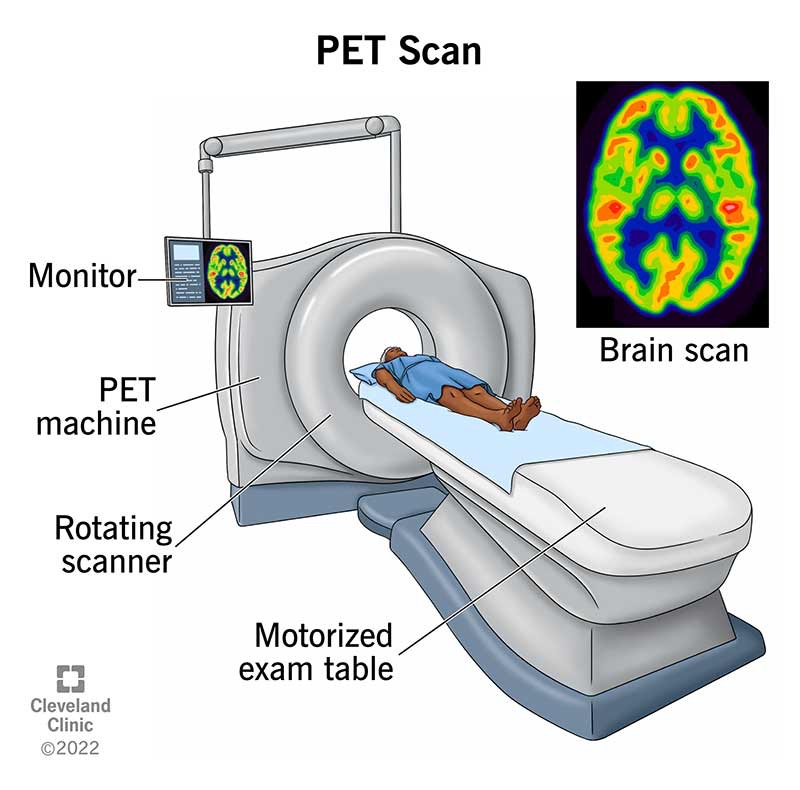
Machine used for PET (and CT) scans (image from Cleveland Clinic).

Prior to the scan, an injection of a glucose-based radiotracer is given. A person has to wait about 45 minutes after the injection before the scan is started. This gives the radiotracer time to circulate through the blood stream and body. 

A PET scan can take 30 minutes to 2 hours depending on what exactly is being examined. The radioactive tracer allows the machine to detect diseased cells. Diseased cells will uptake (or collect) more of the glucose radioactive tracer because they are more metabolically active than healthy cells. This increased uptake is visualized as brighter spots on the imaging.

The most common radiotracer used in PET scans is fluorodeoxyglucose (FDG).  Once it’s inside the cell, it’s trapped. The PET scan machine can quantify the amount of tracer uptake using SUV. SUV (Standard Uptake Value) is a quantitative measure used to assess the concentration of the tracer. 

SUV represents the ratio of the amount of radioactive tracer in a specific region of interest (like a tumor) to the amount of tracer that would be expected in a similar volume of normal tissue, taking into account the injected dose and patient’s weight. 

Changes in the SUV number over time can help determine how well a patient is responding to cancer treatment. 

In an imaging report, SUV numbers are reported. The radiologist or oncologist can then compare the SUV numbers to previous PET scans to determine if the cancer is more active (higher SUV number) or less active or inactive (lower SUV number). 

While all of this sounds very concrete and specific, it’s still just an approximation of what is happening in the body. Results from a PET scan are used along with other factors such as how an individual is feeling, whether or not there is pain present, and blood work results. 

PET-CT

Sometimes a PET scan is done in conjunction with a CT scan. The same machine does both of them and a patient would have both done during the single scanning session. The combination of both a PET and CT scan produces a three-dimensional image that allows for a more accurate diagnosis. 

A CT scan is Computed Tomography and uses x-rays to get a detailed view inside the body. It produces still images of organs and body structures (such as bones). Sometimes it’s referred to as a CAT scan – it’s the same thing. CAT = Computed Axial Tomography.

Instead of creating a flat, 2D image, a CT scan takes dozens to hundreds of images of your body. To get these images, a CT machine takes X-ray pictures as it revolves around you.

After a scan is completed, the technician makes sure the images look ok and then it is sent to a radiologist to interpret and read. The radiologist writes a report of what they see, ideally comparing it to previous PET or PET-CT scans. That report is then forwarded to the oncologist and the patient. The oncologist and patient, together, determine what changes to make to treatment (or not) based on the scan results as well as other factors such as how the patient is feeling and blood work.

A summer of good news

I’m happy to share that my cancer seems to be quiet and stable. I’ll take this.

I had scans 2 days ago and appointments today with my oncologist and for treatment. The CT scan identified something on my sternum but it can’t distinguish if it is healed bone or new cancer. Imaging is imperfect.

I have been getting CT scans (with contrast) and a bone scan roughly every 3 months since my diagnosis. I have bone-only disease and it’s hard to get good information from these images.

My oncologist wants to switch me over to PET scans, and he wants to do the next scan in October, two months away. I think he is suspicious of the CT results. Insurance companies don’t like to pay for PET scans but the oncologist is pretty confident he can make a good argument. I’ve only had one PET scan and that was how I was diagnosed with bone metastasis.

My immune system is not great right now – my blood work came back with low neutrophils. So, I have to wait a week to restart my Ibrance. I’ll have more lab work next Wednesday and if it looks better I can restart it. If it comes back the same then he will probably lower the dosage of the medication.

I have been having nerve pain all summer. I had a kypoplasty on June 1; the pain largely continued. I had an epidural steroid injection 2 weeks ago; the pain continues. Since nothing showed up on the CT scan, we can assume it’s not new cancer so I’ll head back to the other doctor to see what we can do.

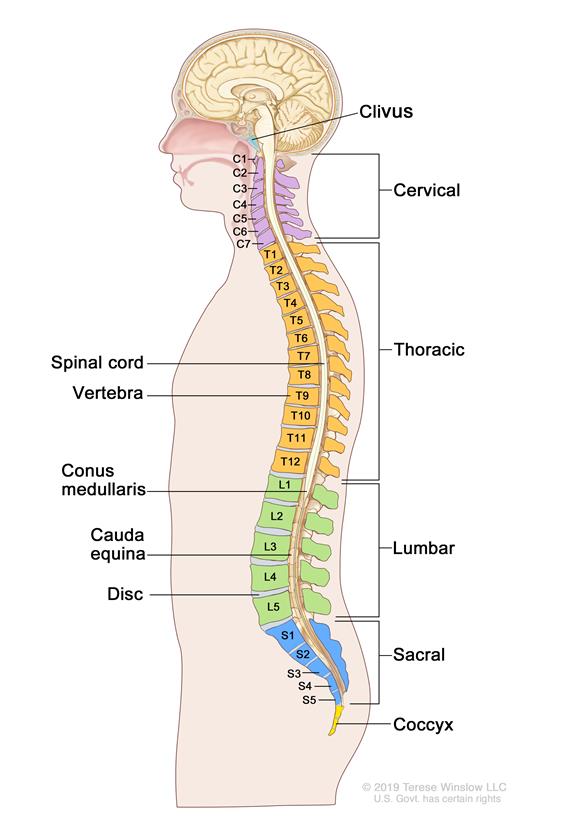
The nerve pain is from the L4/L5 and extends all the way down my leg which makes walking difficult. I’m trying to get exercise in the warm water pool of the YMCA. It’s been a frustrating summer from a physical standpoint.

In other news, Evelyn is home from Europe and Maddy finished a 2 week, 12-hour per day dance workshop at the University of Colorado. It’s nice to have them both home. Ev will move into her apartment in ~1.5 weeks. Maddy starts her junior year next week. Glen is working a lot and will take time off later this month for an annual fly fishing trip.

However you choose to finish out the summer, I hope it is exactly what you need it to be.

Status quo & pain management

“We do not need to change treatment plans at this time.” Music from oncologist Dr. Andorsky’s mouth to my ears this morning! What does this mean? My CT scan showed no progression of cancer, things are stable.

So, we carry on!

The one thing that did show up on my CT scan was the hot mess that my L4 vertebrae is, including a new compression fracture. I’ve not been feeling well since my fall in April and my oncologist was a bit worried this might have been due to progression. It appears that the pain is all related to my fall.

This of course is fantastic news and quite a relief. Is a CT scan absolutely definitive? No, it is not. It is a bit of an art to monitor terminal cancer. This being said, we have as much data as possible and so I’m confident we are on the right path.

My oncologist was very happy with how things are going and I think he was a bit relieved to see me in better spirits.

The reason for my better spirits – besides a stable scan – is that I’ve been able to keep my pain under control and I feel like I’m getting stronger. I can walk unassisted (no cane). I can walk more confidently both up and down stairs. I have not resumed longer walks or walks outside. I’m staying on the treadmill and trying to increase my length and endurance.

We have a plan to hopefully eliminate the pain!

On Thursday, June 1, I am scheduled to undergo an outpatient procedure to fix the compression fracture on my L4 (a kyphoplasty). Basically, they will go in, guided by imaging, and place a little balloon where the fracture is, lift up the vertebrae and inject some cement so that the vertebrae is not compressed.

The pain I currently have is mostly nerve-related pain in my leg. It’s decreased with my medication, but is definitely still there. I am very optimistic that this procedure will help and I’ll be back walking on the trails by mid-June! Cross your fingers with me!

And also please celebrate with me. Living with Metastatic Breast Cancer is stressful and my family and I live in 3 month increments. This provides just a tiny bit of breathing room and will make for a fantastic summer.

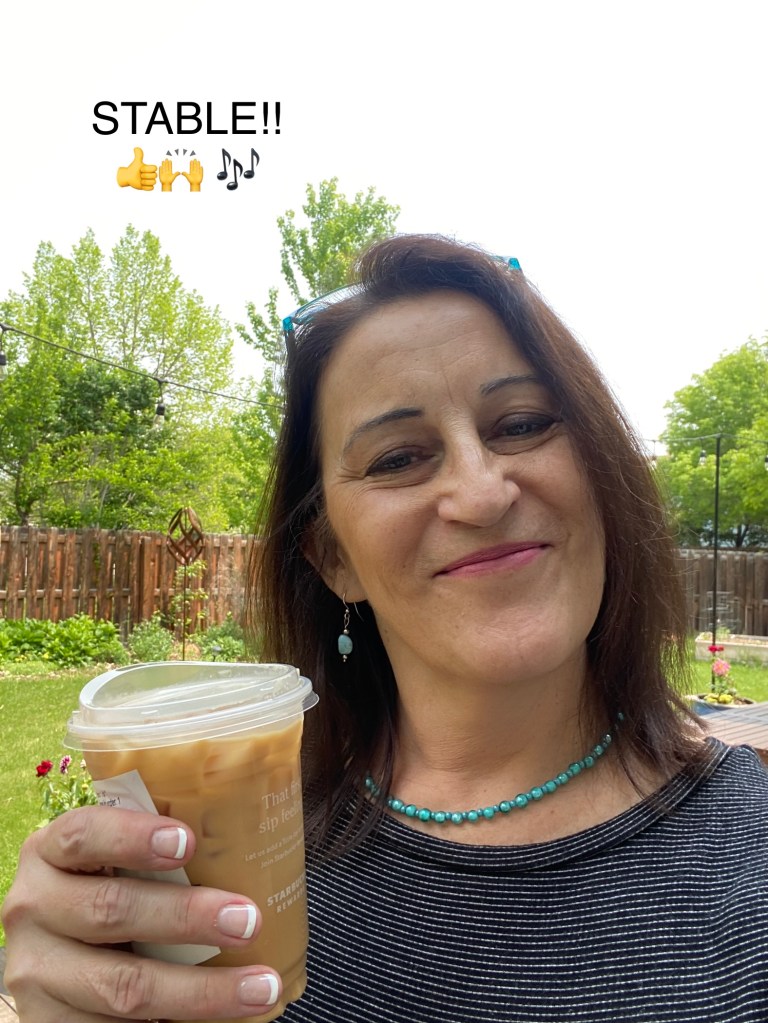
I always have a plan for when I get my CT scan results. Today’s treat was a fancy iced coffee.

Update – November 3, 2022

Winter has given us a sneak peak today. First measurable snow of the season.

I had monthly appointments this week. My CT and bone scans were the same as August. This means STABLE MABLE is back. 🙌

My enthusiasm is tempered a bit by a cranky hip.

My back pain is gone for now, and I’m having trouble walking due to hip pain. So much so that my oncologist ordered an MRI, which I had today. I’m hoping it gives me some answers.

The hip pain means my daily walks have ceased – for now.

Fingers crossed the MRI shine a light on the problem.

Onward!

~~~~~~~~

Current meds (2nd line of treatment): 
* Ibrance, 125 mg (oral meds)
* Fluvestrant (monthly shots)
* Lupron (monthly shot)
* Zometa (quarterly infustion)

Keep on Swimming – update, June 7, 2022

It was a good run. I’ve been on the same (first) line of treatment for nearly 3 years (July 2019). Alas, the oncologist thinks that the medication is failing me and that we should move to the next line of treatment.

It’s important to note that the medication is failing ME and not the other way around. I’ve done nothing to cause this.

I had a Zoom call with my oncologist this morning because I’m still under the weather from COVID. He went over my bone scan and CT scan results.

Short version – The CT scan showed some mild bone disease worsening and new small fractures on the C7 and T3 of my spine. Given that we’ve had the “should we change treatment?” conversation for ~6 months, he thinks it’s time.

Previous areas of my spine impacted include C7, T9, T10, L4 and S1. Latest scans show more fracture on C7 and also T3.

So, disappointing but not surprising or unexpected. The doctor was very upfront with me from the beginning – we have medication to treat Metastatic Breast Cancer (MBC) but no cure. Eventually all the medication will fail. It’s not a matter of ‘if’, rather ‘when’.

We are finalizing my next line of treatment. The standard of care is a drug called Flaslodex (aka Fulvestrant). I’ll share more about it later.

I have 2 options: (1) Flaslodex alone or (2) randomized clinical trial with Flaslodex and Verzineo (Abemaciclib, another CDK 4/6 similar to Ibrance). I opted for the trial.

A research nurse will call me about the trial and we will sort out details.

Sigh. Knew it was coming. Still a bit of a gut punch. This is the long game though…

I asked about progression free survival (PFS) on Flaslodex. He said his general experience is 1-3 years. He said I did better than average on Ibrance and so that could be an indicator of how well I respond to treatments. Overall, of course, hard to say.

I may have to go a bit without treatment so it flushes out of my system before starting the new one, especially for a trial so that they can be sure the effects are from the new medications.

As of today, still taking first line treatments (even though they are failing me): Ibrance, Anastrazole, Lupron, Zometa

March 16, 2022 -Sneaky Lobular Breast Cancer

Where to start – I had scans on Monday, March 7. The fantastic news is that both my bone scan and CT scan were stable! What does that mean? Based on the imaging it looks like the cancer is quiet in my skeleton and it does not appear to have spread elsewhere. Yay! The oncologist uses the scans as the measure of how well the medication is working so – we stay the course. Same medication, go back monthly for checks. Scans again in 3 months.

Every month I also get blood drawn for a tumor marker test (CA 27-29). The blood tests may or may not be reliable as an indicator of cancer activity. My oncologist orders this test but doesn’t make treatment decisions based on it alone.

A CA 27-29 value of under 38 means no active cancer. At diagnosis I was 122. As I’ve mentioned previously, my numbers dropped to a low of 42 in February of 2020 and have been rising steadily since then. This past month it jumped a lot. The most it ever had. I’m not going to lie, it freaked me out. That number is now at 185. (Note, numbers can vary wildly, I know some MBC patients with values around 3,000.)

Why worry about this if the data might not be reliable?

Well, I have invasive lobular breast cancer. The cancer is missing an enzyme and so instead of forming in a mass, it forms in a string. This means that lobular breast cancer doesn’t generally show up on scans.

So, is the tumor marker rising because it’s just not reliable for me? Or is it rising because the lobular cancer is active but just not visible on scans?

🤷‍♀️

We just simply don’t know. Lobular breast cancer is a very distinct subtype and also very understudied. As a result, it is treated just like the more common ductal cancer.

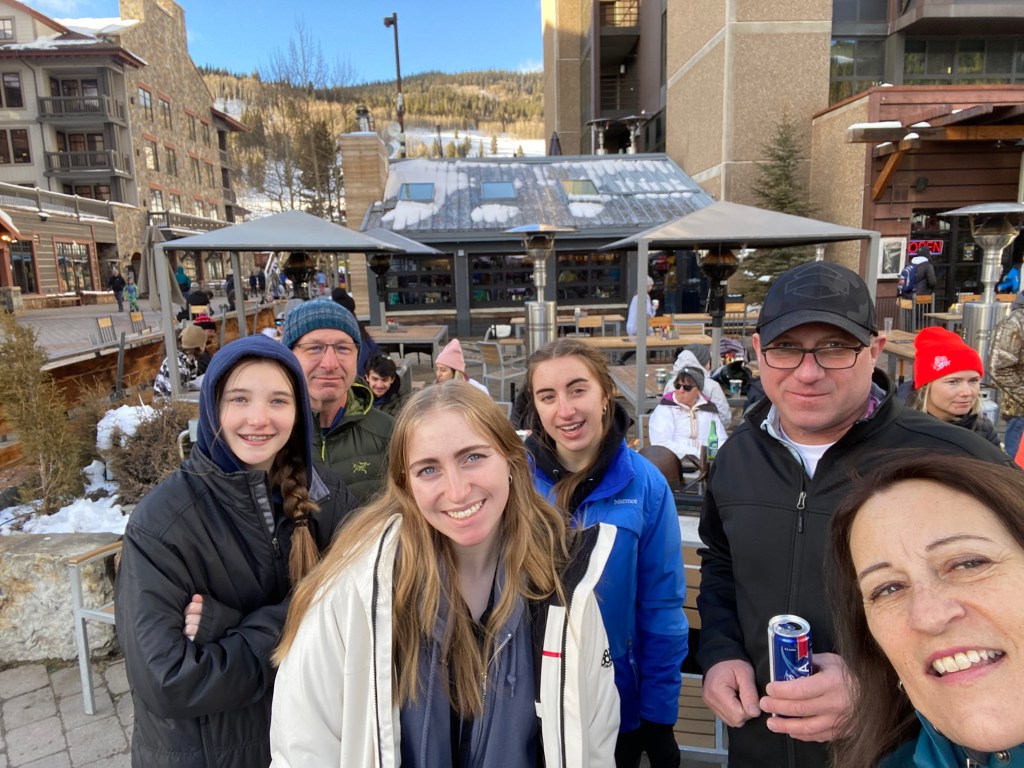
In the meantime, I continue to work, walk and spend a lot of time with the family. We took a few days to go up to the mountains to ski with family and it was fantastic to be able to go do that.

Take care of yourselves. Get vaccinated and boosted and really live today!

The crew at Copper Mountain ski resort. It was gorgeous weather!

~~~~~~~~~

First line of treatment. Current medications: Ibrance, Anastrazole, Lupron and quarterly Zometa infusions.

Fall update – November 9, 2021

Most days, my living with stage 4 breast cancer is probably very similar to you. Wake up, enjoy coffee, scroll phone, think about what’s coming up. Lately that’s meant planning for Maddy’s 15th (golden! 15 on 11/15) birthday, helping Evelyn with college apps, planning meals, and sneaking in walks with Glen.

I’m grateful that my life with MBC as been so “normal”. It’s easy to get caught up in the normalcy of life – and then you have a day like today where I’m jolted back to reality.

Short version: My bone scan was stable compared to June (great). My CT scan shows 2 areas of “interest” (not great, but not necessarily bad). At this time they are not actionable so I’ll continue the same treatment regimen and we will repeat scans in early 2022.

Longer version: I had a bone scan in early October. This procedure images my entire skeleton to look for areas that are damaged by cancer or healing due to medication. It’s an inexact science with the radiologist looking to see how much uptake there was of the tiny amounts of radioactive materials (tracers) that are injected into me hours before. Areas of the body where cells and tissues are repairing themselves most actively take up the largest amounts of tracer. My scan from October looked the same as the one from June (where they thought there might be progression). The “no change” message is one we want to hear! The breast cancer cells in the bones can compromise the strength of the bone and cause other problems, largely it’s manageable.

I had a CT scan in late October. The CT scan goes from my neck to my lower abdomen. The purpose is to look for breast cancer cells that may have migrated to the soft tissue. Cancer in the soft tissue is more worrisome than in the bones.

I had to go to a different location to get my scan and I think a different radiologist read the imaging. My oncologist noted that this radiologist is very thorough and tends to be “conservative” in what is reported – meaning everything that shows up is documented.

My report listed 2 areas of note and things that we will monitor. No action at this point. We will compare the next scan in early 2022 to see if these 2 areas are problematic or not.

The first is a nodule on the upper lobe of my right lung. It’s small, 6mm in size. These nodules can pop up all the time. My oncologist said it’s too small to biopsy and wouldn’t show up on a PET scan. These type of nodules apparently are the most common incidental finding on scans. There is no way to tell yet if this is cancer-related. We will need to watch to see if others pop up or if this one gets bigger – or if it goes away.

The second is an enlarged lymph node on left side / arm. It’s enlarged but within the “normal” limit (8×12 mm). This type of thing waxes and wanes normally. Could be related to an infection, could be cancer, could be nothing. It’s something to watch.

What to make of all this? Well, it is a reminder that while everyday life seems normal for me, it’s really not a normal life. I hope that as you go about your day and encounter others, remember that you have no idea what might be happening in that person’s life. Be kind. Be thoughtful. Live each day to the fullest.

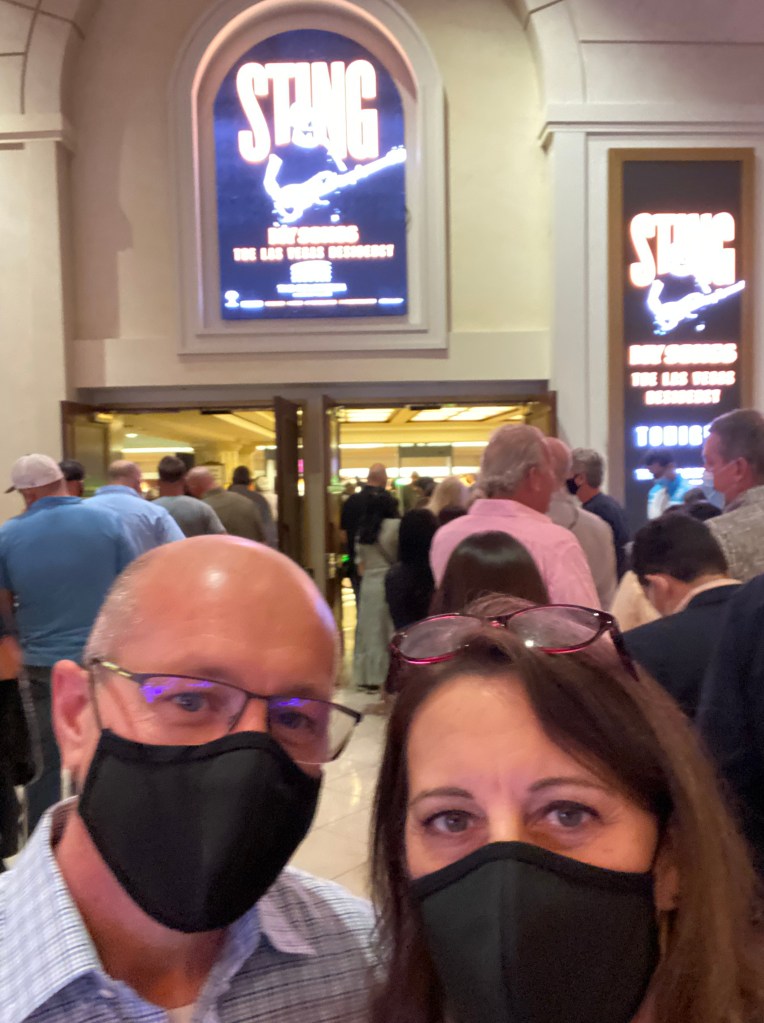
p.s. Glen and I are making the most of each day. Last week we splurged and saw one of our favorite artists (Sting) in concert. Fortunately, they required full vaccination and we made masks part of our stylish outfits! (And I’m guessing no one who saw us would have imagined what my health situation is!)