Summer, Scans & Science

June 4, 2025

Happy summer my friends. In Colorado we are starting off with a cool, wet one which is great for the a/c bill but less ideal for exploring outside.

Lot’s going on here including medically.

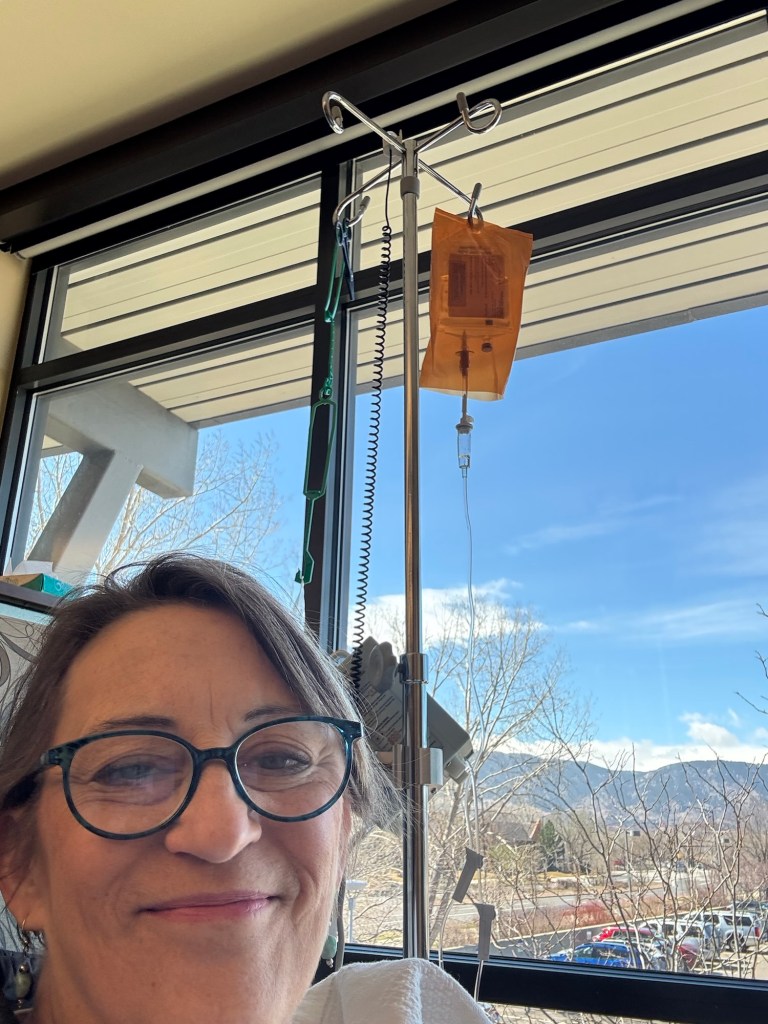
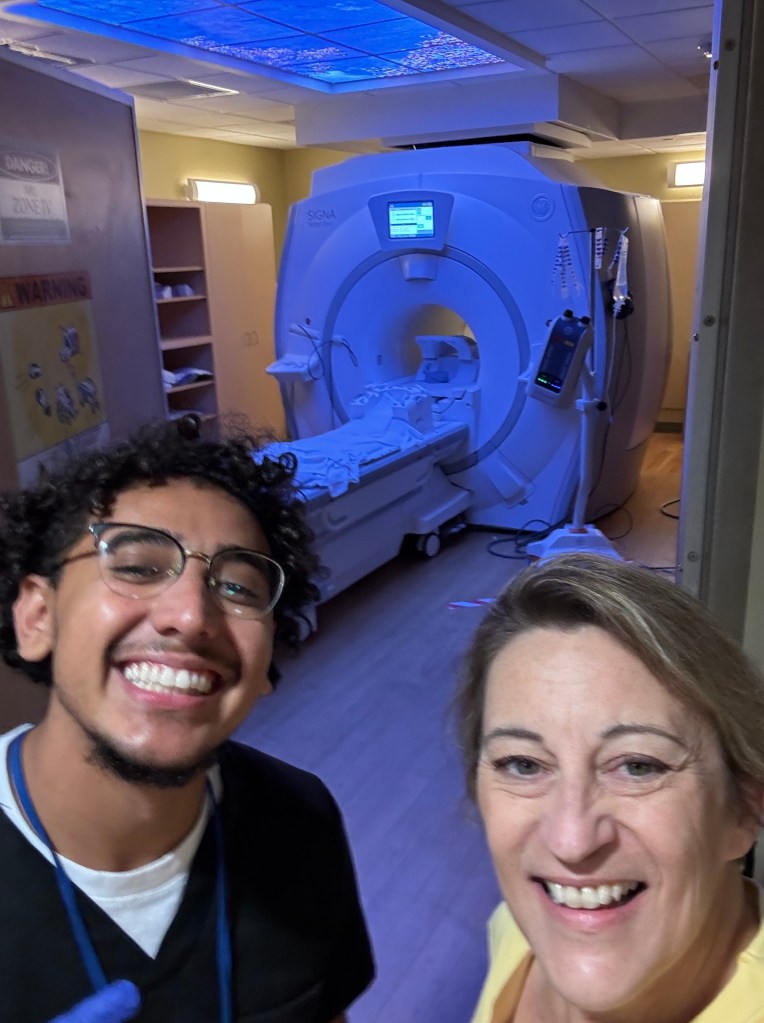
I had some work travel last month and towards the end I started not feeling well, including being light headed. I mentioned this to my oncology nurse 2 days ago during my treatment appointments and she scheduled a brain MRI and echocardiogram. Yes, light headedness triggers the immediate thought of brain metastasis.

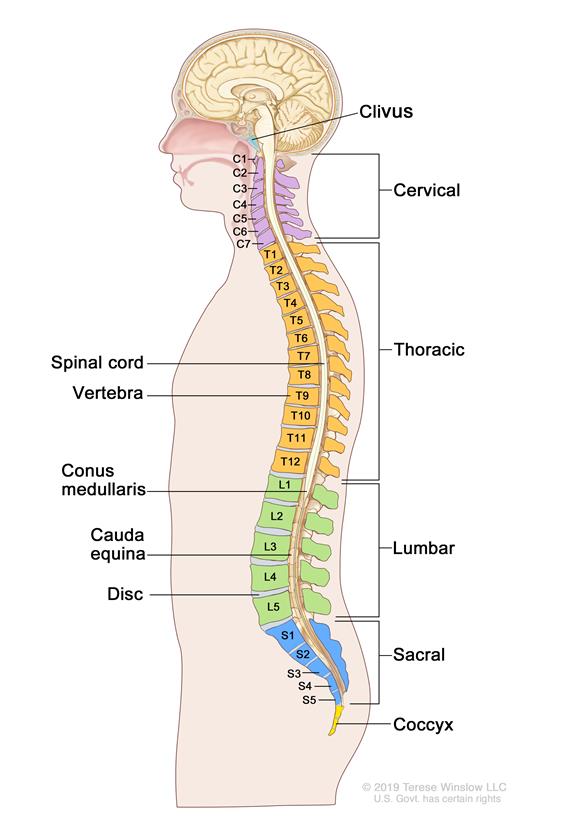
Recall from my last post that we’ve found the MRI to be the best imaging for me. The brain MRI captures the head and top part of the spine (cervical). Mixed results: no brain metastasis 🙌 but it did pick up a new lesion on my C1 vertebrae 👎.

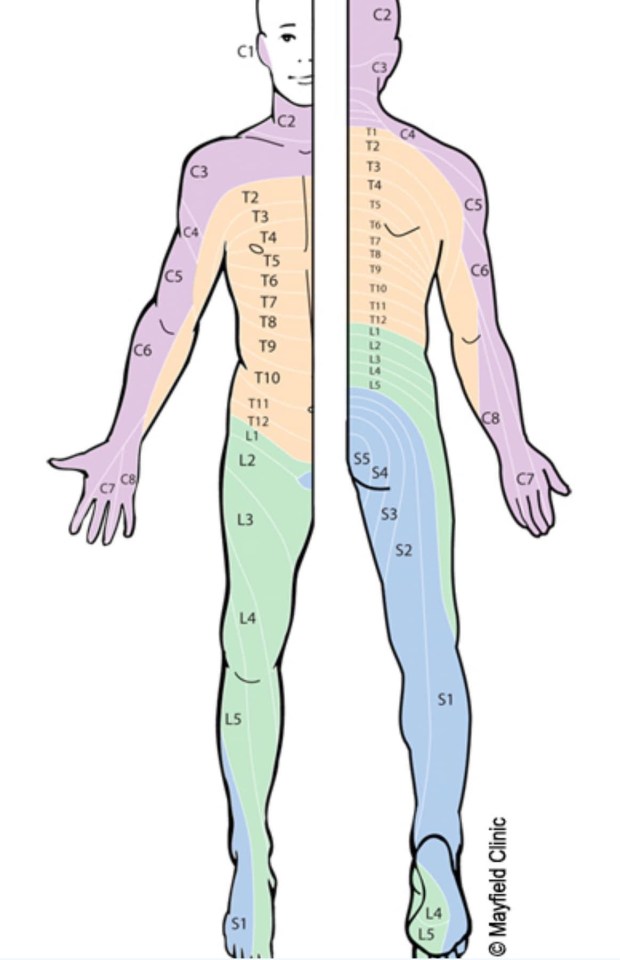
The nerves that come out of the C1 impact the sides of your face and head as shown in this nifty diagram (one of my fav diagrams BTW).

The most likely explanation for my light headedness is that the lesion (tumor) is pressing on the nerves. So, my oncologist has ordered another PET/CT to check again. It seems a little insane to keep getting imaging that doesn’t work so well – I guess he wants to confirm or look for other lesions.

My tumor markers did drop the end of last month which is in contradiction to the new tumor.

See how complicated and tricky cancer is?

For now, I’ll get the PET/CT and an echocardiogram and keep doing all the things (eating healthy, moving, relaxing) and we shall see where this takes me.

After my work trip I spent 2 days in Chicago at the American Society for Clinical Oncology (ASCO) where I learned about new treatment lines coming out and connecting with other patient advocates.

The cancer research going on now will result in the drugs being used in the coming years. This is why it is so important to preserve funding for the National Institutes of Health. The presidents budget slashes funding by almost 50%. That means many fewer clinical trials and many fewer drugs in 5 years. No one expects to get cancer. If you get cancer in 5 years you will be wishing the NIH had done more research to help you. Please call your elected federal reps and push for restoring funding to NIH.

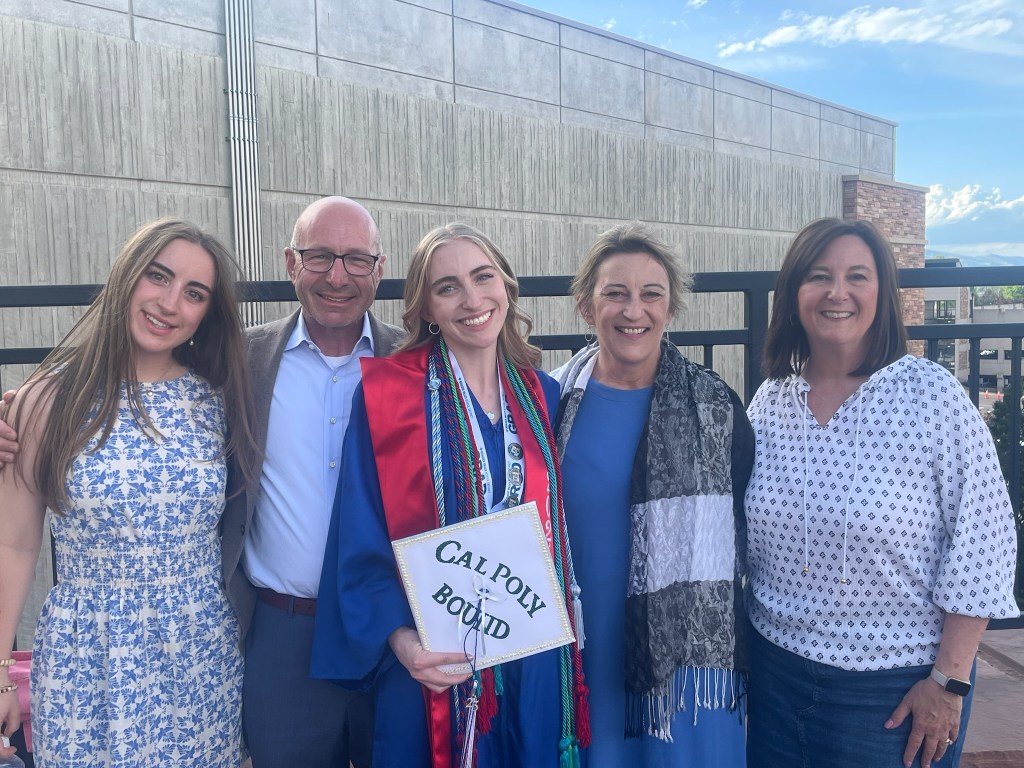
On a lighter note – Maddy graduated from high school, Evelyn started a research internship at University Colorado Anschutz Medical Campus and we all head to Las Vegas at the end of the month to support Maddy in her last National Dance Competition.

Onward!

Thankful 💖

We are in the throes of fall and the Thanksgiving holiday is less than a week away. For many people, this time of year causes more reflection. For me, it’s mostly gratitude.

I’m grateful that I am able to celebrate another holiday season with my family. I’m grateful that most days I can live my life like I don’t actually have a terminal disease. I’m grateful for friends and family that support me and I’m grateful for science and scientific researchers who are working to find more treatment options for me.

I’m grateful that my oncologist is top of the game and is always a step a head of me. I appreciate that because, as you can imagine, I’m the kind of patient that comes with questions about new drugs and clinical trials.

Speaking of which, I spent all of yesterday afternoon researching clinical trials. Clinical trials.gov is a database of every clinical trial happening in the U.S. As you can imagine there are tens of thousands. Fortunately they have a decent search feature.

Even better are two trial search sites that focus on breast cancer. The Storm Riders site allows you to search for any trial related to breast cancer (any stage). It’s a fantastic resource. If you know anyone with breast cancer I hope you will share it with them.

The other site is Metastatic Trial Talk. This one is focused on stage IV, metastatic disease. In spite of searching and reading through many, many trials, I did not find any that were particularly helpful for the next treatment line. That was a little disappointing.

Last month my oncologist shared a trial with me for my next line that basically compares two different types of IV chemo. While that is fine, I’m really hoping for something that doesn’t require me to go in to the cancer center every week for an IV infusion.

I’m still taking Enhertu and the side effects have stepped up their game lately. Actually, I don’t know if they are side effects or just bad luck with something else.

I have tingling in my left arm that comes and goes. I had a Brain MRI and MRI of my cervical spine. The brain MRI was clear (yay!) and the cervical spine showed that the openings in some of my vertebrae where nerves exit are a bit too small and pinching the nerves, potentially causing the tingling.

What is causing this in my cervical vertebrae? I met with my neurologist and they are convinced that it is not a result of cancer. My oncologist thinks the same thing. What did they say? “This kind of thing can happen when you are 50+.” I don’t buy it. I think there is something going on that is causing it, likely cancer.

I also have a blood clot under my left collar bone. That could be causing the tingling. I’m on blood thinners now to prevent any new clots from popping up.

To top things off I’ve been having episodes of vertigo. My PT did the Epley maneuver and that helped initially. However, the episodes continue.

So, where does this leave me? Good question.

I will have an infusion of Enhertu on December 4. I will have a PET scan the following week followed by a telehealth appointment with my oncologist. My CA 27-29 tumor markers have been rising, so that’s not great. At that appointment we will know if the cancer is quiet or progressing. If it’s quiet, we continue on with Enhertu. If it’s progressing, we change treatment.

In between my Enhertu infusion and scan I will need to travel for work. I don’t mind traveling for work but it’s certainly not fun. It’s harder for me now than before my diagnosis so I try to go only when I really have to.

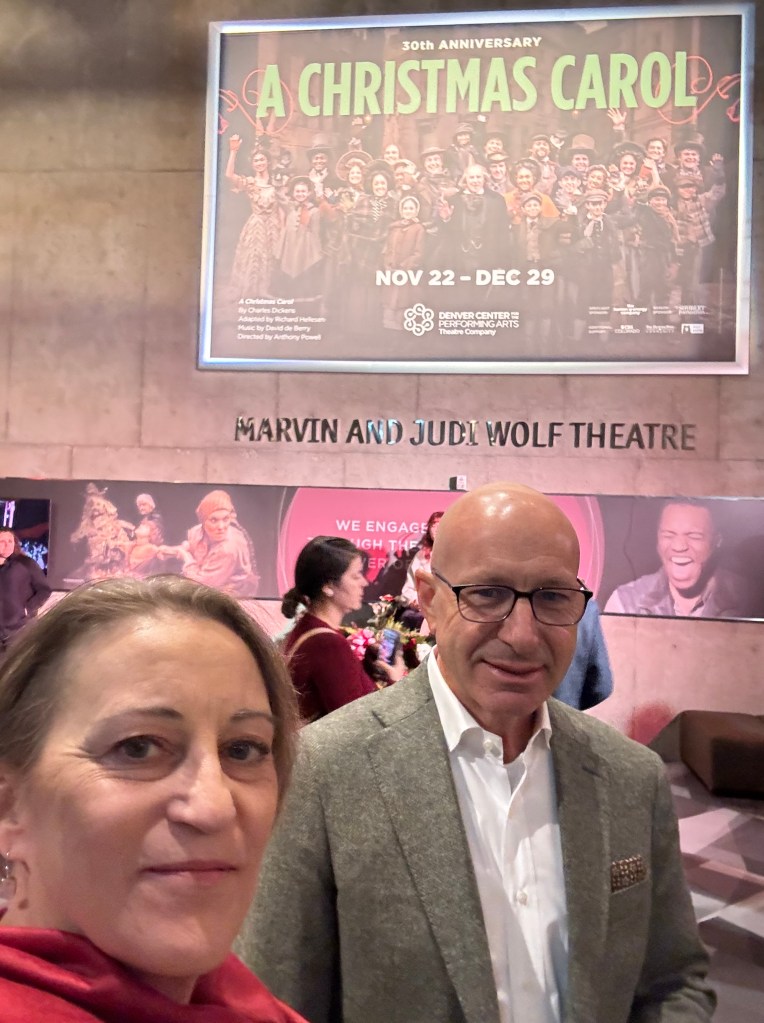
That’s my cancerland part of life. In the rest of life, I’m still working FT. I’m almost finished with a painting project, I’ve started painting with watercolor, and Glen and I went to the theater to see A Christmas Carol. The girls are off in Vienna now, exploring and having some quality sister time.

I hope that all of you have a meaningful Thanksgiving holiday, whatever that looks like for you.

Onward!
BCAM and Lobular Conference

October 20, 2024

It’s been a busy couple of weeks. The main thing to share is that I feel great and have largely been able to do all the things I’d like to. My main medication (Enhertu) does cause significant nausea and vomiting (yes, that is the reality of MBC) but I have some medication that largely keeps it at bay.

My recovery from the hip replacement is going very well. All restrictions are lifted and I’m working with my PT to get more flexible as well as gain strength and endurance while walking.

October is Breast Cancer Action (Awareness) Month. This year hit differently for me and I can’t pinpoint it. It’s been hard. I did update the blog pages to include my favorite organizations for supporting breast cancer. You can see it here: Organizations to Support. If you are inclined to share some of your hard earned money to breast cancer research you are welcome to donate to my efforts to support METAvivor on this page.

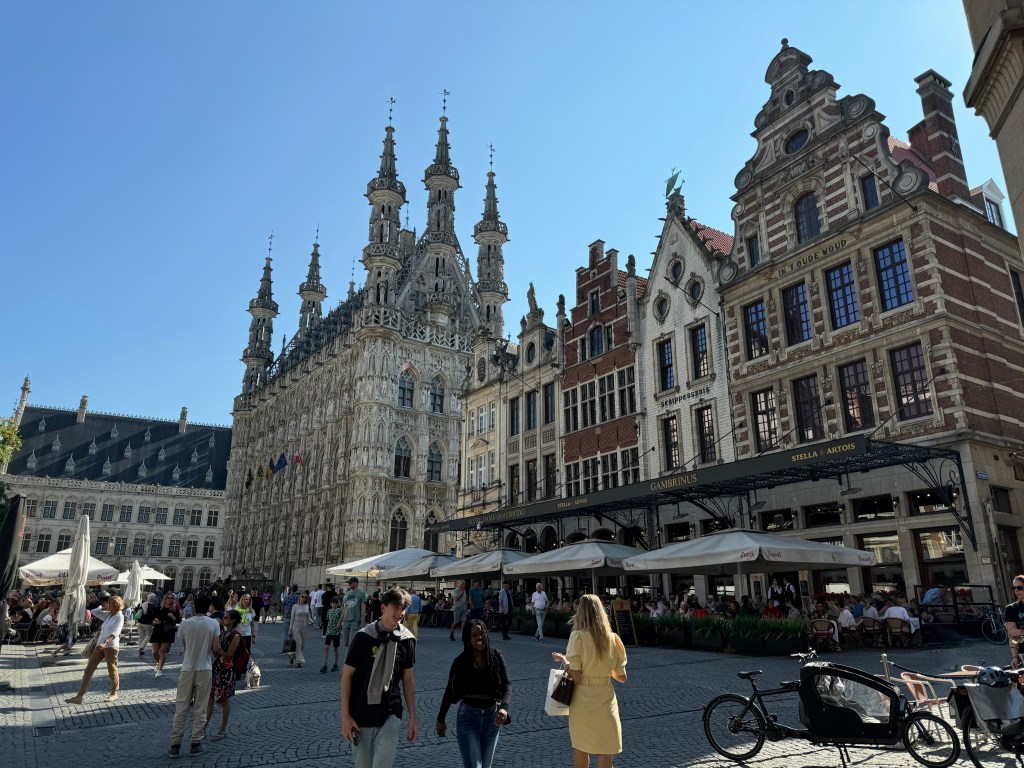
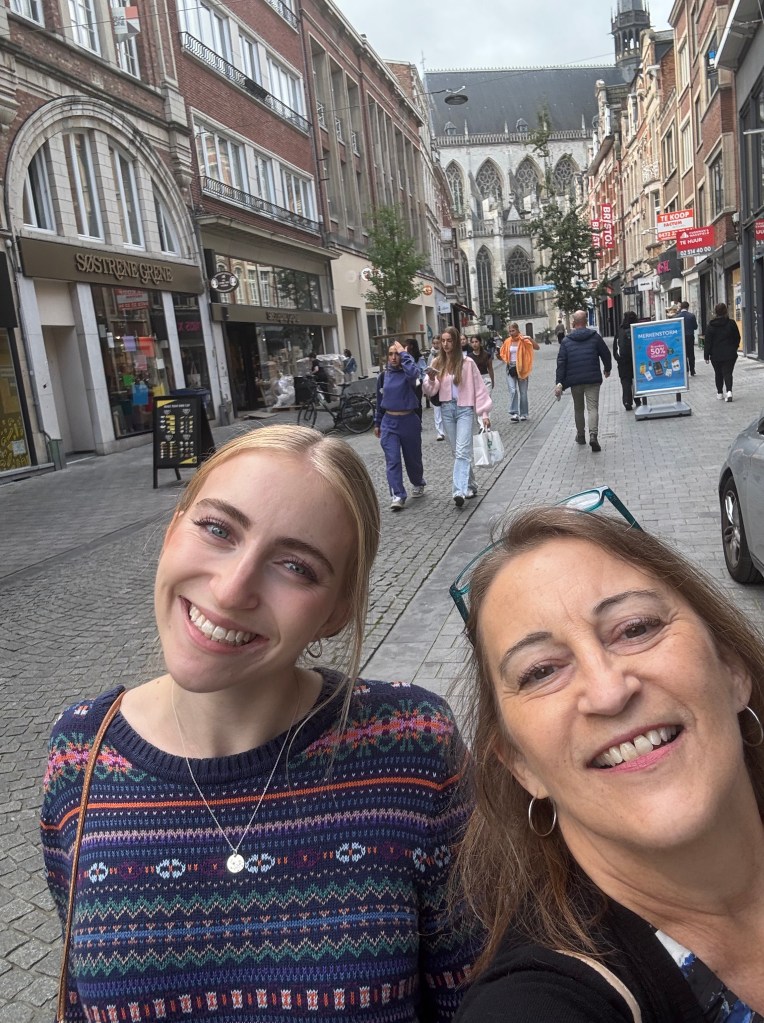
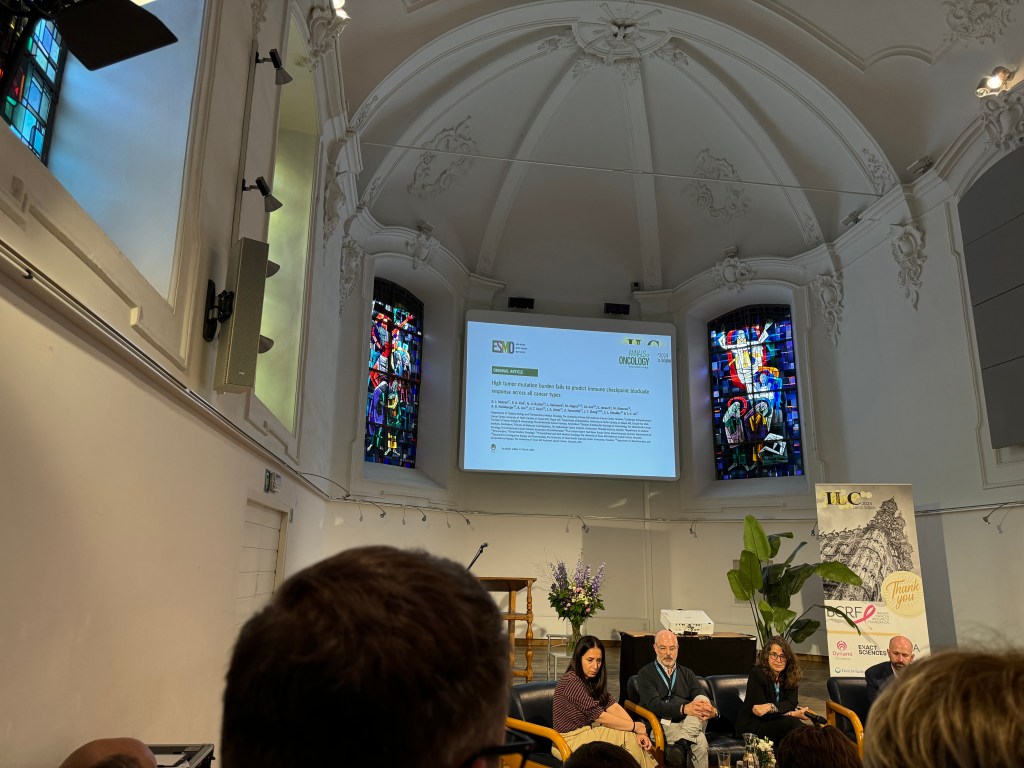
Last month Maddy and I went to Belgium to attend the International Lobular Breast Cancer Symposium. In addition to enjoying the city of Leuven, I learned a lot about the state of research of lobular breast cancer. I have a short write up of what I learned at the end of this post.

Going back to the month of October and breast cancer – please “Think before you Pink” and know where your money is going. Awareness will not help those of us being treated for cancer. Ask questions, if they can’t tell you where the money is going it’s probably not a good investment.

I have treatment again this coming Wednesday. I’m usually at the cancer center for ~4 hours total including office visits, labs and treatment. I use the time to keep up with work but also read – or nap!

Take care of yourselves and your loved ones and enjoy fall.

Onward!

Here is the summary of my experience at the Symposium:

The ILC Symposium, held in Leuven Belgium, was attended by clinicians, researchers, and patient advocates. I attended the 3-day event as a patient advocate. There were just under 190 people in attendance. There are three main points I took away from the Symposium. Imaging for ILC is not very good and needs a lot of improvement. There are new opportunities for understanding an individual patient’s ILC/disease using circulating tumor cell technology. There are many people passionate about ILC and working to move the needle both in treatment and awareness. I found the opportunity to network with other patient advocates to be very good on Monday. We traveled to the university hospital and the time together on the bus allowed for very informal conversations. On the way back from the hospital we discussed what we saw and how the treatment there differs from the U.S. I found the lunch period another good time to network. It was rather difficult though for me personally to manage lunch because I have mobility issues and a cane and there were no tables to sit at. Because of this I ended up sitting elsewhere initially during lunch and then working to join conversations after.  

I attended a breakout session devoted to “Imaging primary and metastatic ILC.” Breakout sessions ran concurrently and attendees could self-select which they wanted to join. There were approximately thirty attendees in this breakout session. The overall message was that imaging needs to be improved to be able to diagnose and monitor lobular breast cancer. It was interesting to hear from multiple people on the panel that there is also a shortage of radiologists, causing delays for patients. Patient concerns were shared with researchers and clinicians and among the top concerns were access to imaging, exposure to radiation, contrast exposure and difficulty with IV placement.   

The second session I’ll summarize was focused on Tumor Microenvironment, specifically in Metastatic ILC. Here there was a presentation about circulating tumor cells (liquid biopsies) and how that may be a future way to monitor metastatic progression. There needs to be more research and clinical trials into liquid biopsies in various biofluids (beyond blood). This is an area that really needs more focus. Also discussed in this session was to promote research on misdiagnosis and delayed diagnosis in ILC as well as addressing patient-identified concerns through targeted research. I found those two discussions very interesting, and somewhat frustrating. It is clear we have a long way to go when it comes to diagnosing and treating metastatic ILC.

I’ve already had the opportunity to share what I’ve learned. I attended a metastatic breast cancer event the week after the Symposium and shared with other patient advocates what I learned. In addition, I’m the moderator for two facebook groups (one focused on lobular bc) and I shared some information already and will share more in the coming weeks. I also posted on social media during the Symposium, reaching several hundred followers. My hope is not only to educate but to prompt others to become ILC advocates in the future. 

Toward a New Hip

August 25, 2024

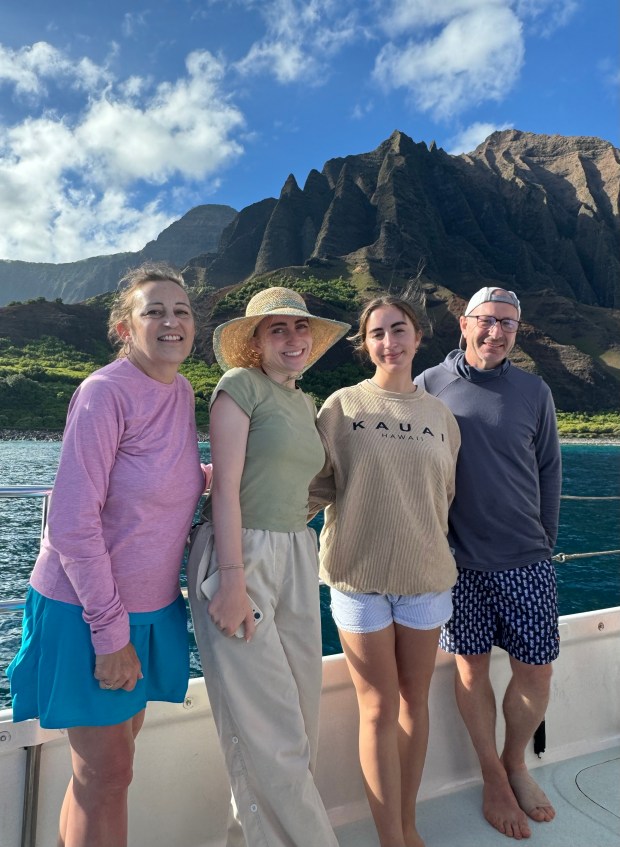
Happy end of summer everyone. It’s been a good one for me all things considered. I had some work travel and also some fun personal travel. I was in Wisconsin with Evelyn and Maddy to visit family and shortly after that we took a family vacation to Kauai, Hawaii.

The Nepali coast. You can only see this area by foot, boat or aircraft

Kauai was beautiful as you might expect, it is called the Garden Island! We had a grand time. I was not able to do all the things they did with hiking and surfing. I did mange to read two books and get through a full season of a Netflix series. Those are things that an are tough to do in daily life.

My cancer is still here of course, just hanging out. I had a PET scan in July and it was a bit “brighter” than the previous scan. What does that mean? Could mean that the bones were healing (growth) or it could mean that the cancer is growing. Confusing? Absolutely!

My tumor marker numbers (taken via blood work) have been pretty reliable. The higher the number the more active the cancer. Over summer, they had been creeping upward a bit. But….the most recent blood work saw them drop back down.

So, my oncologist decided we would repeat the scan in 2 months instead of 3. I am scheduled for a PET scan mid-September. After that we will determine if we should switch medication (progression) or stay the course (stable). We talked about what is next….a different kind of chemo. There is the possibility of getting into a clinical trial which I will try to do. More on that later when we get to that point. It is good to have options. As I’ve mentioned many times before, there are limited lines of treatment. Once I run through them all, then that is it. So, we want as many options as possible. Adding in clinical trials is a way to increase the number of treatment lines AND help advance scientific research.

In the meantime, I have this fracture starting in my acetabulum (extending from the socket of my hip) extending upward into my hip. The femur connects with the fracture when I step, causing a fair amount of pain and discomfort. I continue to walk with a cane to relieve the pressure. I actually wore out my first cane and had to buy another one!

Tuesday, September 3 (the day after Labor Day) I will have a full hip replacement. I’ll stay in the hospital for 2 nights and then recover at home. Glen has some international work travel so Ann has kindly agreed to come out and help me. I’ve been told by numerous people that recovery is not difficult. I’ve been working with my physical therapist on some pre-habilitation to make sure I’m in the best possible place. In addition to the PT exercises I continue to walk daily. I’m up to 8000 steps a day which I think is pretty good.

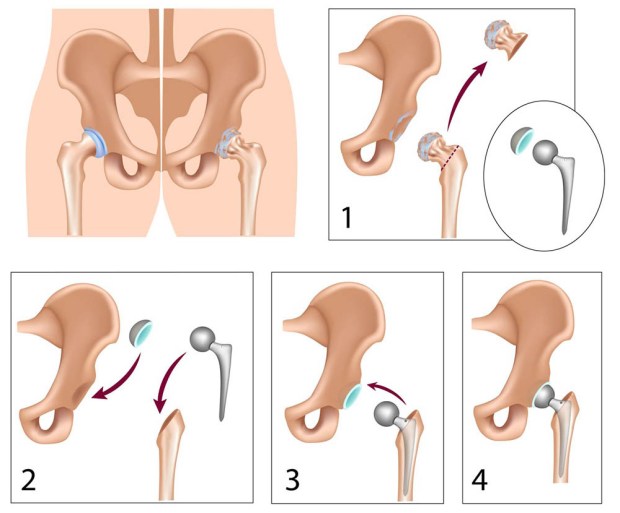
I did learn what it means to have a full hip replacement. If you are squeamish you might want to stop reading here!

They cut off the top of your femur and replace it with an artificial top. It could be metal or ceramic or plastic. Your bone is hollow and so they basically hammer the artificial femur top into your bone so it stays. They also put something in where the socket is. I’m not positive how that will be attached but likely with special cement. Apparently the material of the femur and the new socket are not the same material, it is rare for a surgeon to use a metal-on-metal replacement.

This image shows the various parts and how they fit together.

This image is pretty self-explanatory. The material for the socket and femur head will be TBD. My surgeon said he will be doing a posterior approach which might take a tad bit longer to recover from.

I am cautiously optimistic that this will go smoothly and I will be up and about in no time. My surgeon has green-lighted me to take an international trip 3 weeks after my surgery so he thinks the same thing apparently!

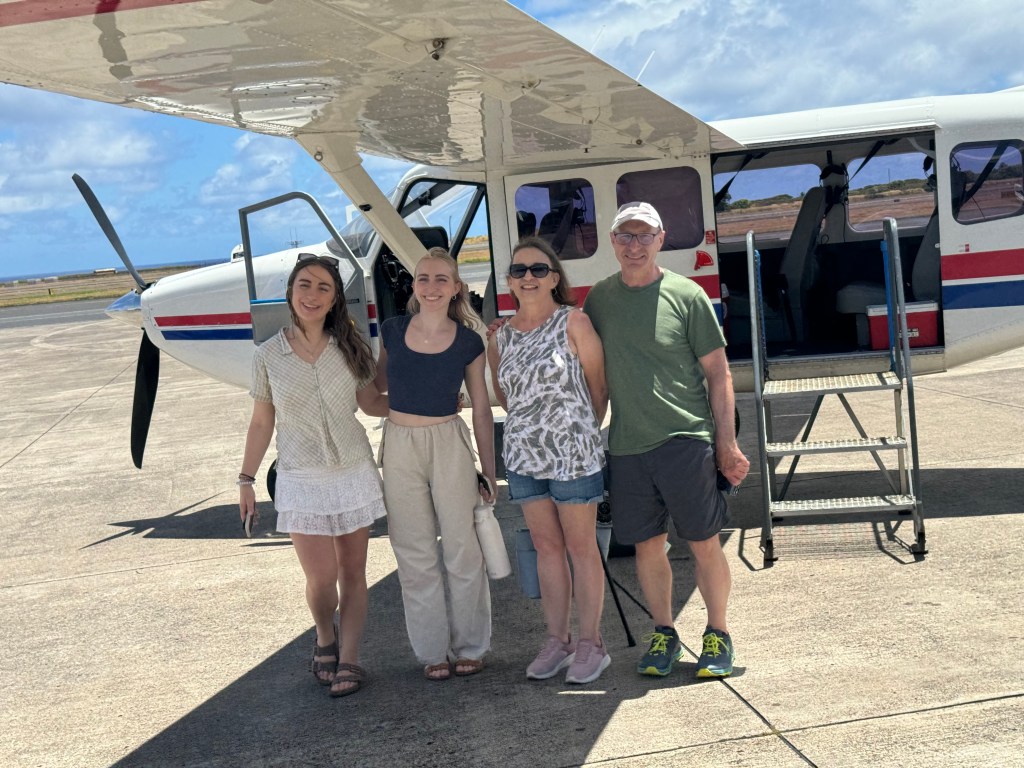
A few fun photos from summer. Missing here is Maddy’s first day of senior year, visit to Wisconsin, and many walks and lunches with friends.

Onward!

Plan A and Plan B, and C, and… – November 30, 2022

If you know me well, you know that I’ve always got a plan and a backup, and a few more backups beyond that. I gotta say, my current life situation was no where in my planning or remotely on my radar.

This being said, we’re not fortune tellers, so we have to give ourselves a little grace if life doesn’t go as we plan, hope, or desire.

Short update: Had my monthly visit to the cancer center. Pretty routine – awesome blood draws by the lab techs, lovely chats with the Nurse Practitioner and front receptionist, and once the IV was in my infusion was smooth. The second stick for the infusion is always tricky. My one good vein is used for the labs and then they pull in the rock star nursing staff to get a vein the second time.

Anyway, this was a routine check to make sure nothing weird is going on and everything is A-ok.

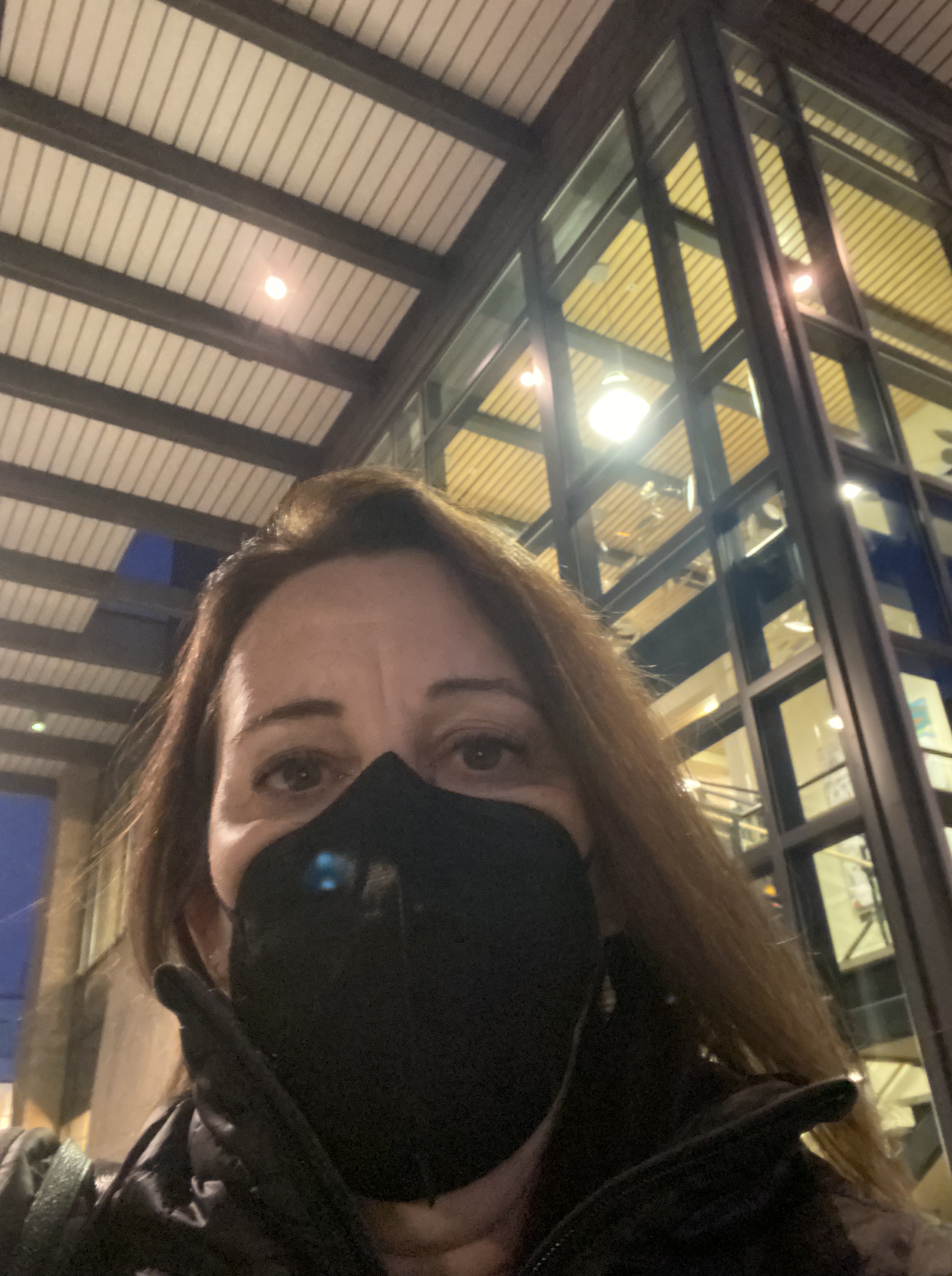
Perk of a mask is that it keeps my face warm as I exit the cancer center tonight in the cold.

~~~~~~

Longer update: You will recall that with Metastatic Breast Cancer (MBC) there is no cure; only treatments. Once you run through all the treatment lines you run out of options and the cancer wins. So, the goal is to stay on any treatment as long as possible.

There is general guidance for treatments that are based on the subtype of MBC you have. The oncologist and patient talk about the wiggle room in that guidance and make a personalized plan.

Right now it appears that my current treatment line is working (my scans in October were stable). However, it’s always good to be looking forward so we can sort through options and come up with a good plan.

To that end, I got a call earlier today from the Clinical Research Coordinator reaching out with information about a potential clinical research trial that is an option when my current treatment line fails. She gave me paperwork today to read through so I can learn more.

(Fun fact for those of you familiar with the IRB process. The pre-screening informed consent form is 15 pages long. The informed consent for the trial is 30 pages long. A tad bit more detail and information than the ones we fill out for education research!)

I’m somewhat familiar with the particular clinical trial and am eager to learn more. It’s important to note that clinical research trials are not a last resort! There are many that provide standard of care while also investigating new treatments.

I love to have information – and yet – I’m not gonna lie, it was a bit of a gut punch to hear her say ‘when the current treatment fails’. No one wants to think about that, but we have to. Well, I have to. I cannot bury my head in the sand and pretend like the current meds will work forever. I firmly believe knowledge is power and I’d rather be in the power seat with cancer.

One more note – my hip has only gotten crankier. I am hoping to have a procedure done next week (December 5), it’s not confirmed (believe it or not). The not-knowing is frustrating and challenging. I’ll share more once I actually have information.

Uncertainty – July 15, 2022

Uncertainty is tough. We all deal with it everyday and it’s stressful. Hopefully we all have coping mechanisms to deal with it.

Uncertainty with health is a different level for me and probably for anyone with a chronic or life threatening situation.

Last month my oncologist and I agreed to change my treatment plan because it seemed like it was not effective any longer. That’s a hard thing to process.

While there are “Standard of Care” treatment plans for metastatic breast cancer (MBC), it’s not as black and white as you might think. There is room for the doctor to try to tailor the treatment to the patient. Whenever there is a change in treatment there is opportunity to enroll in a Clinical Research Trial. Trials are important because it is a key part of the process in how new treatments are discovered and approved.

My treatment is standard of care “plus”. In this CRT I’ve enrolled in (postMONARCH) I may be getting additional medication or a placebo. It’s a blind study so I don’t know which I am getting.

I don’t know if it is working. I won’t know until several months have passed.

I will have scans again in early August. This is much sooner than I had been getting them because the CRT requires CT scans every 8 weeks. (That also is concerning to me.)

This morning I received bloodwork for my CA 27-29 tumor marker. It’s jumped up a lot. Way more than it ever has. I don’t know that it means the medication is not working – it’s too early to tell I think. I am reading that sometimes when you start a treatment the counts can spike (Patient Guide to Tumor Markers).

So. Much. Uncertainty.

How do I deal with it? Good question.

  1. Honor the uncertainty. It’s not helpful to bury my head in the sand and ignore this. It’s not going away so figuring out how to manage my stress about it is important.
  2. Spend time meaningfully. I feel better when I’m doing something. Keeping busy doing things that I value or spending time with people I care about helps.
  3. Trust the Science. The science of medicine continues to advance. Medical practitioners go through extensive training to best treat patients. I also believe there is a mind-body connection so mental health is equally important.
  4. Take care as best as possible. Continue to eat healthy, move as much as I can, sleep. Control those things I can control. (As evidenced in the photos at the end of this post.)

Life is good and it also has terrible elements. Don’t let those bad moments outshine the good.

Walking in early morning to beat the summer heat.
I LOVE to sit outside in summer and we added lights to make the space more inviting in the evenings.
We have a nice walking path that circles our neighborhood. It’s a nice 15 minute walk that helps me clear my head.

Keep on Swimming – update, June 7, 2022

It was a good run. I’ve been on the same (first) line of treatment for nearly 3 years (July 2019). Alas, the oncologist thinks that the medication is failing me and that we should move to the next line of treatment.

It’s important to note that the medication is failing ME and not the other way around. I’ve done nothing to cause this.

I had a Zoom call with my oncologist this morning because I’m still under the weather from COVID. He went over my bone scan and CT scan results.

Short version – The CT scan showed some mild bone disease worsening and new small fractures on the C7 and T3 of my spine. Given that we’ve had the “should we change treatment?” conversation for ~6 months, he thinks it’s time.

Previous areas of my spine impacted include C7, T9, T10, L4 and S1. Latest scans show more fracture on C7 and also T3.

So, disappointing but not surprising or unexpected. The doctor was very upfront with me from the beginning – we have medication to treat Metastatic Breast Cancer (MBC) but no cure. Eventually all the medication will fail. It’s not a matter of ‘if’, rather ‘when’.

We are finalizing my next line of treatment. The standard of care is a drug called Flaslodex (aka Fulvestrant). I’ll share more about it later.

I have 2 options: (1) Flaslodex alone or (2) randomized clinical trial with Flaslodex and Verzineo (Abemaciclib, another CDK 4/6 similar to Ibrance). I opted for the trial.

A research nurse will call me about the trial and we will sort out details.

Sigh. Knew it was coming. Still a bit of a gut punch. This is the long game though…

I asked about progression free survival (PFS) on Flaslodex. He said his general experience is 1-3 years. He said I did better than average on Ibrance and so that could be an indicator of how well I respond to treatments. Overall, of course, hard to say.

I may have to go a bit without treatment so it flushes out of my system before starting the new one, especially for a trial so that they can be sure the effects are from the new medications.

As of today, still taking first line treatments (even though they are failing me): Ibrance, Anastrazole, Lupron, Zometa

August Update (2021)

August 28, 2021

Hi Friends and Family –

Summer is winding down and things almost feel normal – school is back in session, Glen is on his annual fly fishing trip. I say almost normal because I’m not sure what normal is exactly anymore. I’m guessing many of you feel similarly.

Short version: I shared last month that the radiologist though from the scan images that I may have mild progression. If there is progression, that means the medication is not working and the cancer is growing. Typically that means you move to a new set of medication.

We waited for another month of blood work before making any decisions. Once you leave a line of treatment you cannot go back; you want to stay on a line of treatment for as long as possible.

Last month my blood work looked “ok” so that meant no changes. This month it’s “ok but not great”. I will stay on the same medication though and have scans again in a month or two.

Our normal now includes the stress and anxiety of never knowing if I’m stable or will be searching for a new effective treatment. Not ideal, but better than not having treatment options. So, we march on into fall.

I hope you are all safe, healthy and vaccinated. Please, please get vaccinated if not for yourself for me and others like me – those who are on life saving medication. If we get COVID we may have to stop taking the other medication while recovering. What a terrible choice to have to make.

Miss seeing many of you. Wishing you all a grand end to summer and that our paths can cross – in person – soon.

-Donna

Long version: The CA 27-29 tumor marker is blood work test that gives an indication of the spread of breast cancer. The lower the number the better. Mine dropped immediately after starting my treatment in summer 2019. In February 2020 it was close to “normal” and then has been slowly rising ever since, with a big jump in June – at the same time I had scans.

The increase in the CA 27-29 coupled with the imaging results made my oncologist start thinking about a second line of treatment. There is an opportunity to consider a clinical research trial when you change treatments. These trials are how they test new drugs and they are critical for getting drugs eventually approved. Think COVID vaccine here – before it was approved it went through multiple phases of testing via clinical research trials.

There was the possibility of my participating in a clinical trial as part of my next line of treatment. I met with the clinical trial nurse, got info on the treatment, Glen and I researched it and I also had some blood drawn to see if I would be eligible. From what we could tell, it looked promising. I could only participate if I had a particular mutation. Spoiler alert – I do not have that mutation. So, this trial is not an option for me. If I need to change my treatment we’ll have to go with the “standard of care” or see if there is another trial I might be eligible for.

So, I’m back to just waiting for my next set of scans to see where things are at.